
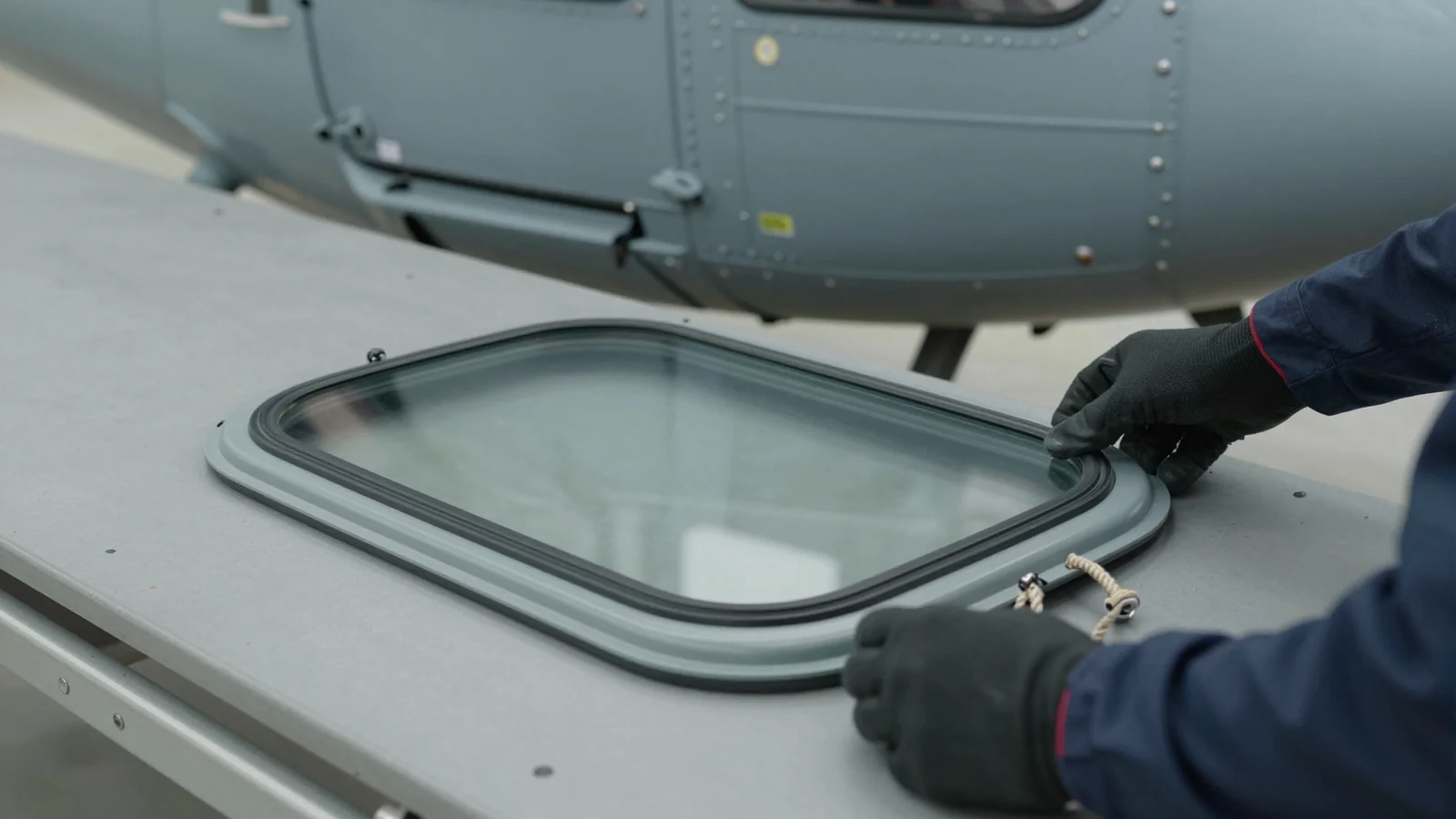
The Federal Aviation Administration proposes an airworthiness directive for Airbus H160-B helicopters after a report that a window's emergency jettison mechanism was blocked. It would require removing the jettisonable windows, cleaning their ropes and operationally testing the window systems.
The inspection copy is scheduled for October 13 publication. It remains a proposal, rather than a final FAA directive already requiring the work.
What the reported problem was
The FAA's background cites a European Union Aviation Safety Agency directive describing a manufacturer investigation. That investigation found white particles from fire-retardant residue on the jettison-system rope, preventing it from sliding and blocking the window mechanism.
The notice says an unresolved condition could reduce occupants' ability to evacuate during an emergency and cause injury. This report attributes that account to the FAA's description; it has not independently inspected the mechanism or the manufacturer's investigation.
The proposed actions
The FAA proposes incorporating EASA directive 2026-0116, dated June 15, 2026, with specified exceptions. Removing the windows, cleaning ropes and testing the release systems are the proposed actions described in the notice.
Where the European document calls for contacting Airbus for corrective instructions, the FAA proposal would require a method approved by the FAA, EASA or Airbus's EASA Design Organization Approval.
The FAA estimates 17 U.S.-registered helicopters would be affected if the proposal is adopted. That estimate is not a count of aircraft confirmed to have a blocked window. The notice says definitive cost data for on-condition actions are unavailable.
How to comment
The PDF brackets a deadline 45 days after publication: November 27, 2026 by this desk's count from the scheduled October 13 issue, also listed in the Register metadata.
Comments should identify docket FAA-2026-11806 and project MCAI-2026-00589-R. The notice says ordinary submissions will be posted without change, including supplied personal information, while confidential business information has separate marking and submission instructions.