
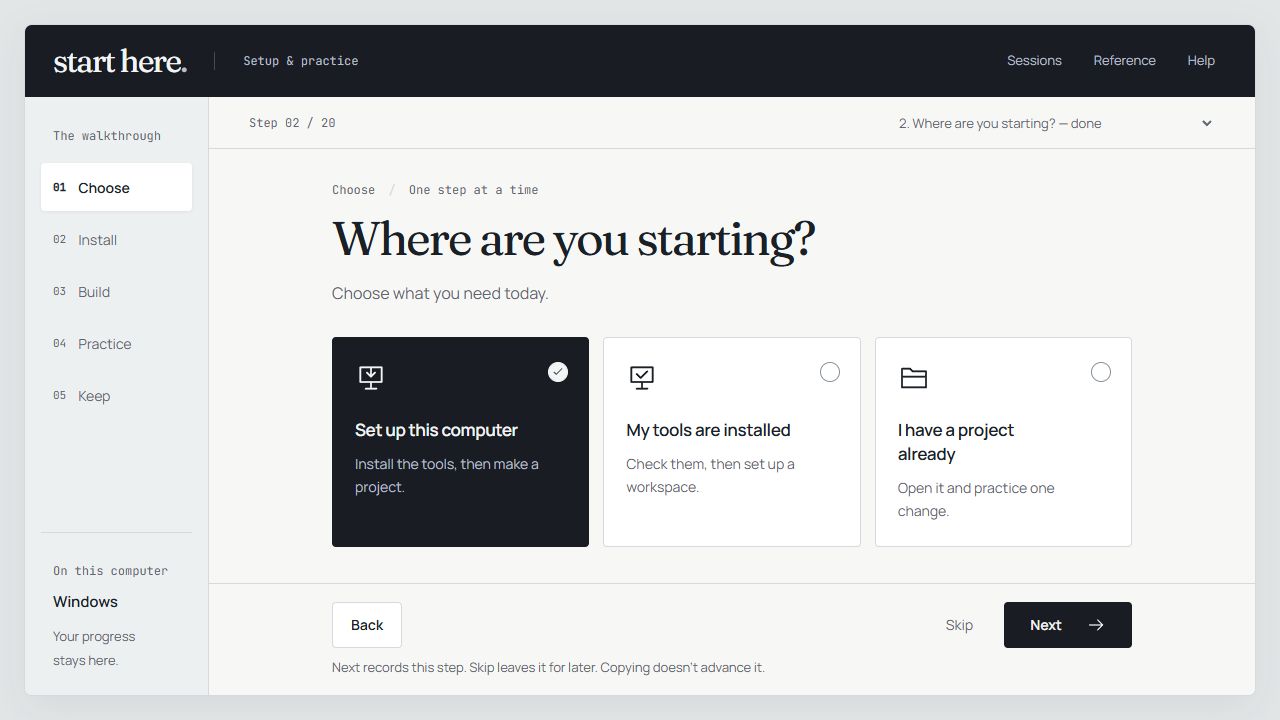
I looked again at the setup guide I had made and wanted to start over with the way it asked someone to move through it. There was too much on the page. I could explain why each part was there, but that did not make the next action clear.
I want one screen that says what to do now, where to paste the command, and what to look for before continuing. A person should be able to go back, skip a step, or get help without losing their place.
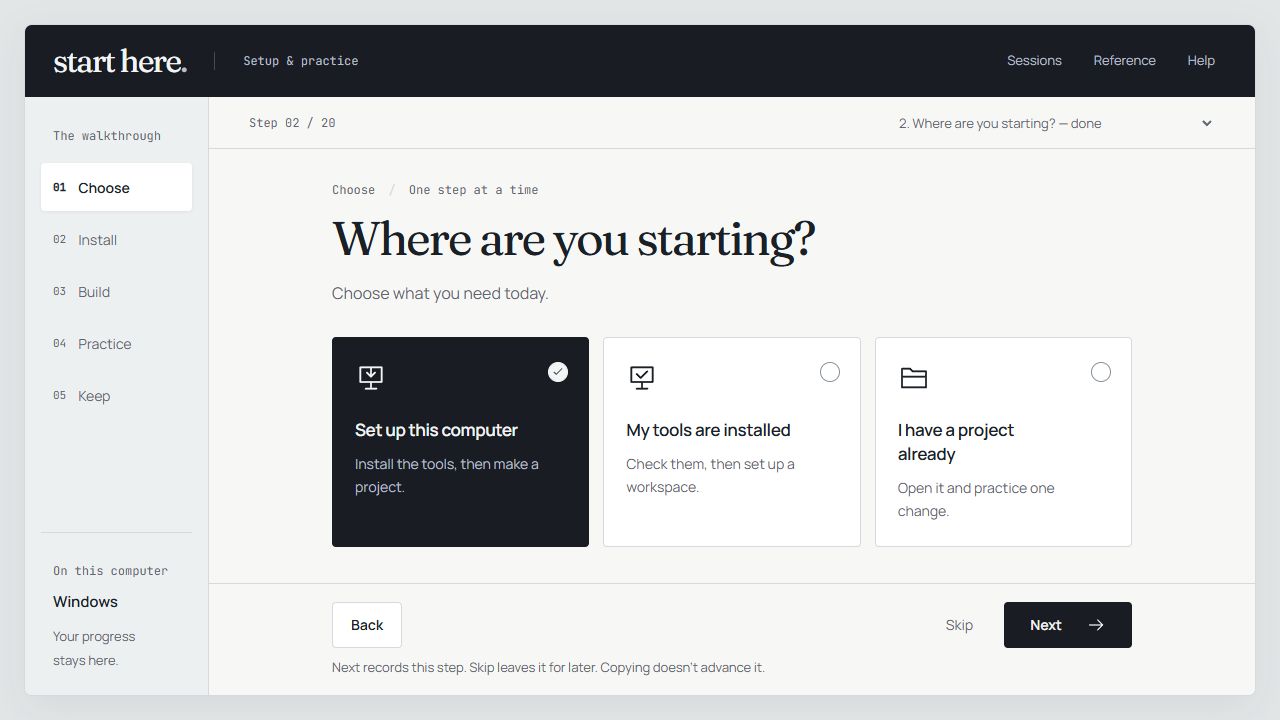
Different starting points
Someone installing tools needs different instructions from someone who already has them. Someone reopening a project should be taken to their existing folder. They should not have to create another workspace just to practice a change.
The walkthrough now separates those routes. Choosing a computer changes the commands. Choosing a project changes the prompts. The desktop pet remains an optional starter. An idea of your own is a useful place to begin.
I still want the learner to choose one behavior, predict what should happen and try it themselves. The guide can carry instructions and remember a place. It cannot supply that person's observation.
Skip has to mean something
Clicking Copy does not finish a step. Clicking Skip leaves it for later. Those sound like small distinctions until a finish screen starts implying that installation worked or that a check passed.
I want the notes to say what was actually tried, what happened, and what is still unknown. Starting another session should preserve the old notes and begin with blank results. Otherwise yesterday's observation can quietly become today's answer.
Help should also know where the person is. I have added a prompt that carries the current step and their error, asks for one next action, and waits for them to try it.
Keep the work and the lesson private
The screenshot here is a demonstration of my materials. It contains no participant work. I can improve the way I teach without publishing somebody else's project or telling their story.
I rebuilt this guide and tested its routes locally. I cannot claim that a cleaner interface has improved learning before someone uses it. The next useful check is whether a person can return to their folder, start their work and make a small change with less help.
That is the teaching standard I want the guide to serve.