
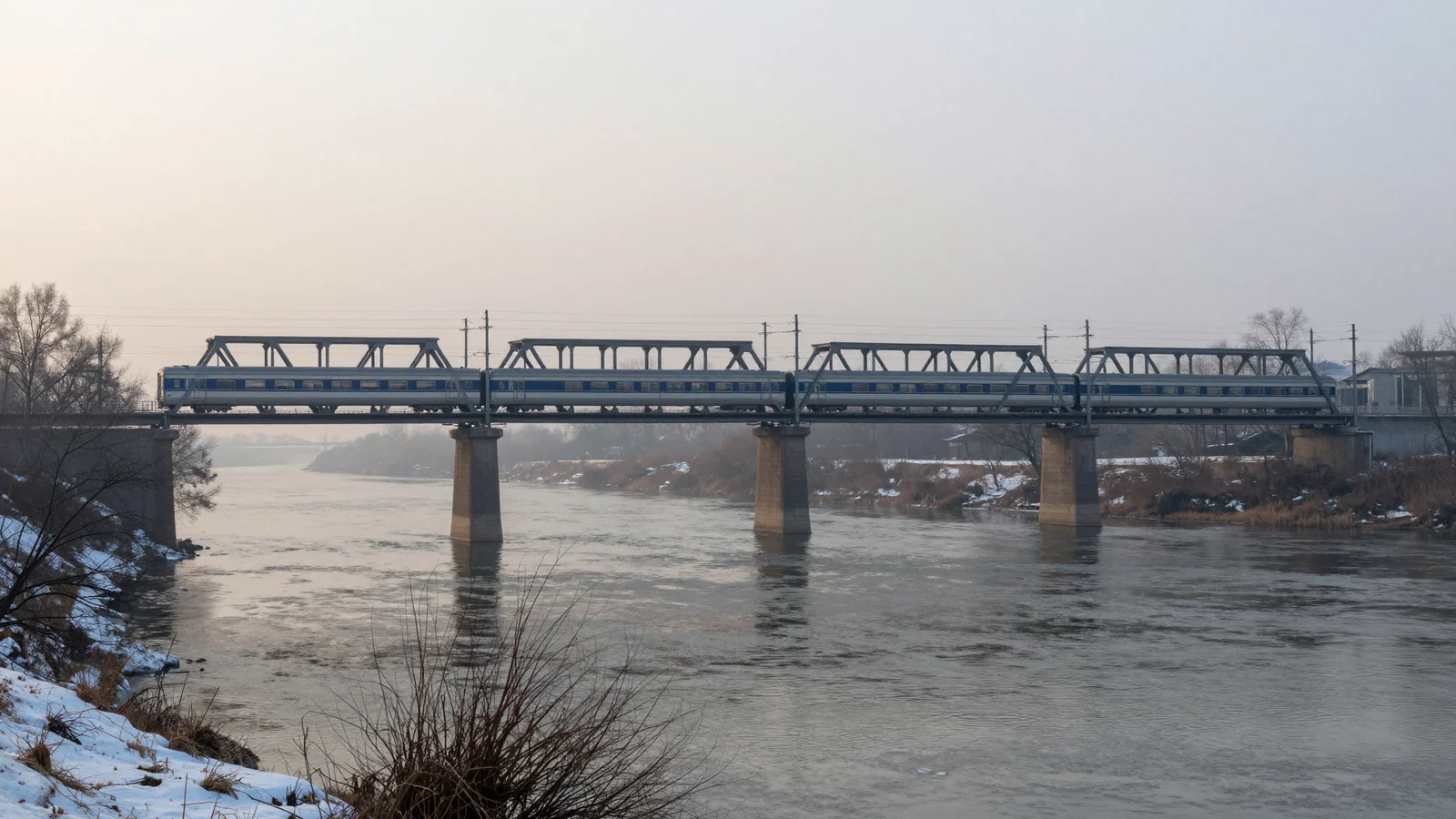
U.S. Customs and Border Protection (CBP) has proposed requiring rail carriers to send it details on the passengers and crew of a train arriving in or leaving the United States. It was filed for public inspection October 9 and is scheduled to be published in the Federal Register October 13. Nothing changes unless CBP issues a final rule.
What would be sent
For each traveler: name, date of birth, sex, citizenship and residence; travel document type, number, issuing country and expiration date, where one is required; role on board; itinerary; and a U.S. address (not for people in transit onward). Where applicable or available: alien registration number, reservation record locator, known traveler number, DHS-assigned redress number, baggage tag information, and car and seat. Carriers must ask for a phone number and email address and, if the traveler provides them, must send them. The document says carriers generally require travelers to provide similar information when booking.
When
Traveler data would be due 60 minutes before departure, meaning the point when the doors close and the train leaves the last station or stop before the border, for arriving and departing trains alike. A notice on the train, with its itinerary and estimated border time, would be due no later than 24 hours before the train reaches a U.S. border crossing. Changes, including travelers getting on or off, would be due when the train leaves the stop where the carrier learns of them (the next stop if learned in between; before the border if learned after departure). The proposal sets no effective or compliance date.
Who it covers
Any passenger or freight train carrying a traveler that arrives from or leaves for a foreign location; the rules it amends cover the Canadian and Mexican borders. Active-duty military on orders aboard Department of War-chartered trains are exempt. The document does not say which railroads or routes would be covered. It assumes 3,497 passenger-train and 70,215 freight-train crossings a year (arrivals and departures together) and projects 231,962 passengers a year processed at the border in 2026 to 2030: 229,665 arriving, 2,297 departing. The departing figure is one percent of the arriving one (this desk's arithmetic); the document says about one percent of departing passenger trains are held for inspection.
What CBP would do
CBP would vet the data and tell the carrier it accepted the transmission or that the carrier must contact CBP before departure. If concerns remain, CBP may recommend not boarding the traveler; the carrier would decide whom to carry. CBP says advance data lets it build photograph galleries through its Traveler Verification Service. The document says the data would be retained in CBP systems in a manner consistent with the Privacy Act and that, if the rule is finalized, CBP will issue or update any necessary privacy impact assessment or system of records notice. It states no retention period.
Costs
CBP's average yearly estimates for 2026 to 2030 (undiscounted 2024 dollars): $58,430 in costs for passenger carriers, $380,495 for freight carriers, $639,071 for CBP. It counts no new passenger cost and values passengers' shorter border waits, half an hour per passenger train on average, at $8,170,861 a year.
The comment deadline
The public-inspection copy prints only a bracket where the date belongs: "[INSERT DATE 60 DAYS AFTER DATE OF PUBLICATION IN THE FEDERAL REGISTER]". The Federal Register's own record for the scheduled October 13 issue, read October 10, gives December 14, 2026. By this desk's count, 60 days after October 13 is December 12, a Saturday. The document does not explain the difference; the Register's Document Drafting Handbook says that when a computed date falls on a weekend or a federal holiday, it uses the next federal business day, here Monday, December 14. Comments go to docket USCBP-2026-0992 on regulations.gov.