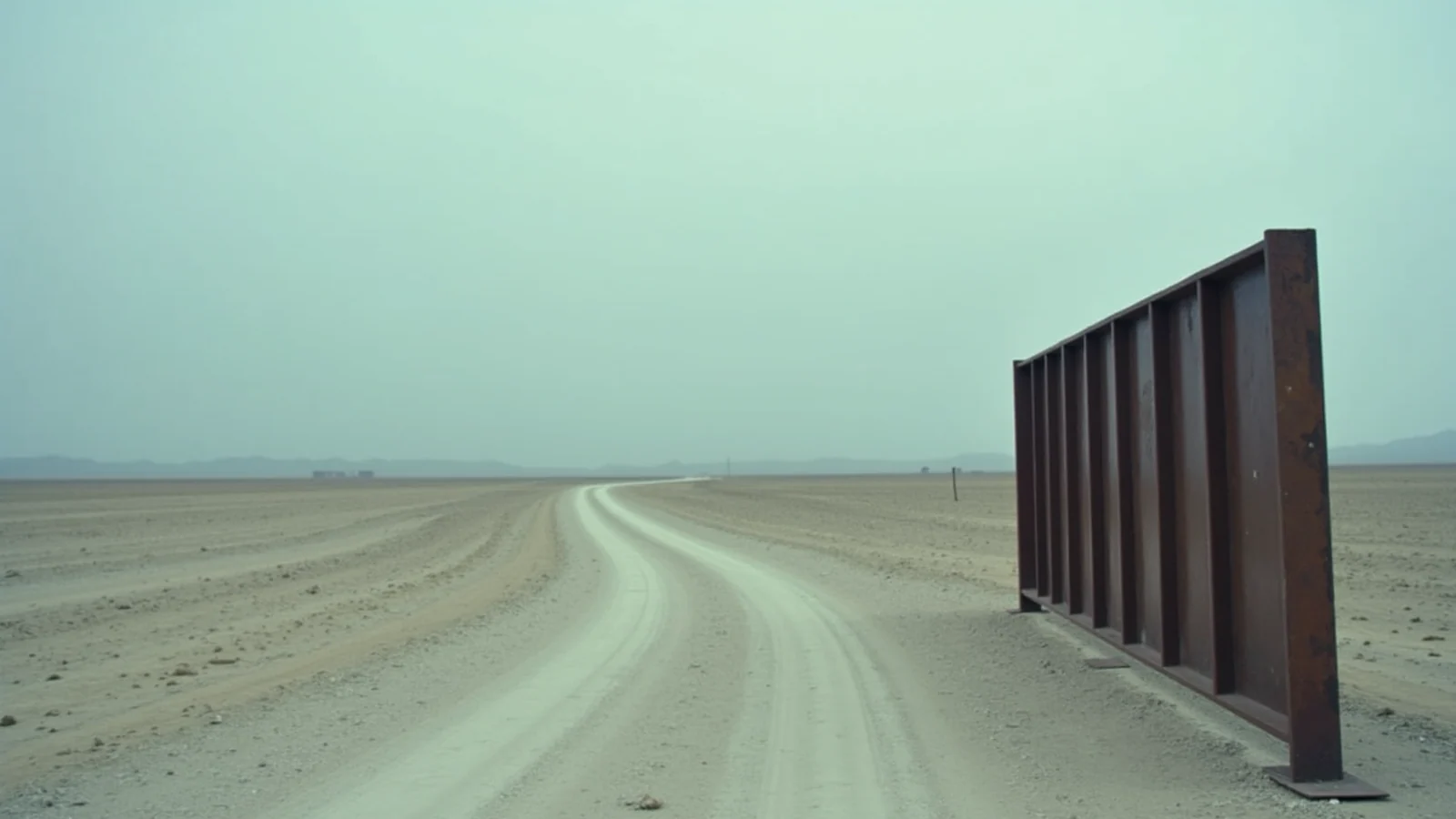
The Secretary of Homeland Security has waived a federal law on water-rights suits, New Mexico's Water Code and two sets of state underground-water rules for building border barriers and roads on one New Mexico segment. The notice, published October 2, 2026 (91 FR 62739), says the determination "takes effect on October 2, 2026."
Where
The notice calls the area the "project area," inside the U.S. Border Patrol's El Paso Sector, and describes it only by border monuments: "Starting at Border Monument 71 and extending east to Border Monument 53, then extending north to Border Monument 40, then extending east to Border Monument 1." It gives no miles and names no county, town or port of entry.
Which laws are waived
By this desk's count, the notice lists three entries:
- Public Law 82-495, section 208 (July 10, 1952; 43 U.S.C. 666). The U.S. Code titles it "Suits for adjudication of water rights"; it consents to joining the United States as a defendant in certain water-rights suits.
- The New Mexico Water Code (NMSA 1978, 72-1-1 through 72-20-103).
- Two parts of Title 19, Chapter 27 of the New Mexico Administrative Code, from the Office of the State Engineer: Part 1 (underground water, general provisions) and Part 4 (well driller licensing; construction, repair and plugging of wells).
The waiver also reaches "all federal, state, or other laws, regulations, and legal requirements of, deriving from, or related to the subject of" those statutes. It covers listed work such as earthwork and drilling and plugging wells. The notice does not name the National Environmental Policy Act, the Endangered Species Act or the Clean Water Act.
Why, in the Secretary's words
The Secretary says the El Paso Sector is "an area of high illegal entry." The notice cites Border Patrol figures for the whole sector, fiscal year 2021 through August 30, 2026: more than 1,248,000 people apprehended trying to enter illegally between border crossings, and more than 285 pounds of fentanyl seized. It says there is "an acute and immediate need" for the barriers and roads.
Limits on court challenges
The notice says nothing about judicial review. The law it relies on, section 102(c) of the 1996 Illegal Immigration Reform and Immigrant Responsibility Act, sets limits. As printed in the 2024 U.S. Code, federal district courts have exclusive jurisdiction, and "A cause of action or claim may only be brought alleging a violation of the Constitution of the United States." A claim must be filed "not later than 60 days after the date of the action or decision made by the Secretary of Homeland Security." A district court's judgment "may be reviewed only upon petition for a writ of certiorari to the Supreme Court of the United States." The notice carries no signing date, so it does not show when the 60 days start.
The waiver "does not revoke or supersede any other waiver determination" under the same section, and the Secretary reserves the authority to execute "further waivers from time to time" under section 102.
Source links
- Federal Register notice, FR Doc. 2026-20233, 91 FR 62739, October 2, 2026 (plain text)
- GovInfo PDF of the notice, Federal Register Vol. 91, No. 190
- 8 U.S.C. 1103 note, Improvement of Barriers at Border (IIRIRA section 102), 2024 Code edition
- 43 U.S.C. 666, Suits for adjudication of water rights, 2024 Code edition
- New Mexico Administrative Code 19.27.1, Underground Water, General Provisions
- New Mexico Administrative Code 19.27.4, Well Driller Licensing; Construction, Repair and Plugging of Wells