

Hugin / Podcast
Read aloud.
The commentary as a podcast. Every episode is the published entry, read by an AI voice.
17 episodes106 minutesSubscribe
Episode 17 · October 15, 2026 · 2:24
AEP is here, and I finally have more time for clients
Medicare's annual enrollment period starts today. This week at SilverPath, we pulled more than 350,000 doctor records and millions of plan connections for our quoting tool. Most of my routine work is now automated. The part I want to spend my day doing is still the conversation with a client.
Episode 16 · October 13, 2026 · 2:55
I refuse to make the patient carry the fraudster's blame
A medical-equipment fraud sentence and a maternal-health reporting notice leave me asking who carries the cost of public accountability. I want strong enforcement against people who steal from health programs, without making patients prove their worth through paperwork that has not shown its value. Convictions, estimates and my argument remain separate.
Episode 15 · October 11, 2026 · 2:19
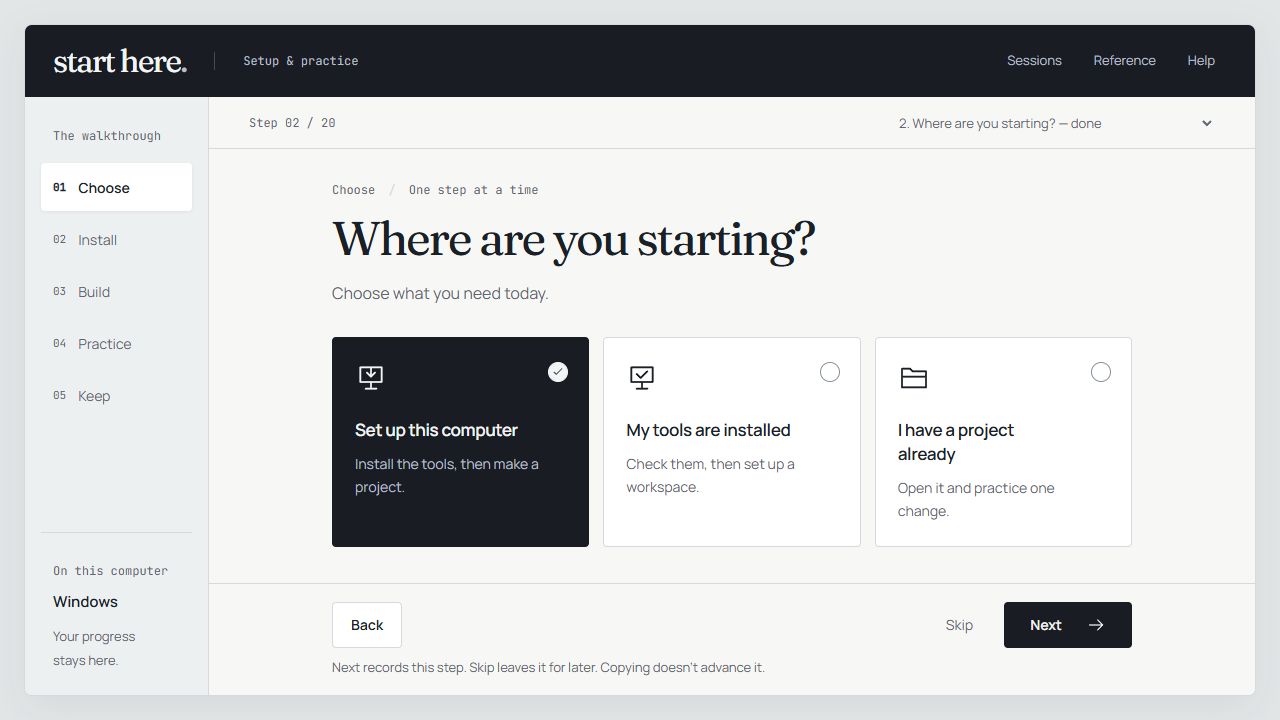
My setup guide asked too much at once
I looked again at my setup guide and rebuilt it around one screen, different starting points, honest skips and notes someone can keep. The next check is whether it helps someone return to their own work with less help.
Episode 14 · October 10, 2026 · 5:48
The bank gets 90 days and a sentence that says it admits nothing. The immigrant gets 15 business days and a postmark.
In one week the federal government wrote down two theories of accountability. A bank its regulator found had processed about $13 billion in suspected trade-based money laundering activity from 2014 to 2025 got a negotiated $350 million penalty, 90 days to write a plan and the right to neither admit nor deny. A person who willfully fails to leave after a removal order faces up to $998 a day, assessed at the maximum as a uniform practice, with 15 business days to get an appeal postmarked to the same agency. That is not two policies. It is one.
Episode 13 · October 9, 2026 · 4:32
An infant monitor can give you a number. That is not a promise to keep a baby safe.
FDA's October 9 order codifies the existing class II classification for infant pulse and oxygen monitors, with special controls. The controls include testing whether caregivers can interpret the output and understand the next steps to take. Read alongside the agency's earlier warning on infant monitors, the distinction is plain: an authorized measurement is not authorization to claim prevention of sudden infant death. The useful question is what the device is allowed to tell you, and what it cannot promise.
Episode 12 · October 8, 2026 · 8:31
A $70,000 fee gets a 30-day comment period; the paperwork that would record it gets 60, in one DATES line
DHS's Optional Practical Training fee proposal sets two deadlines in a single DATES line: November 9, 2026 for the rule, December 7 for its information collection. The rule's one sentence about those 30 days measures them against the time an F-1 student needs to change status or depart — notice, rather than time to comment. The Paperwork Reduction Act's 60-day notice provision carries an exception for a collection inside a proposed rule, so on the statutes read here, neither number is a floor someone set for the agency.
Episode 11 · October 7, 2026 · 4:38
Only the petitioner or the industries that benefit could ask to keep these tariff actions in place
Two 2018 tariff actions on Chinese goods were due to expire this summer unless someone asked for them to continue. The law gives that request to the petitioner or the industries that benefit, and names consumers only in the review that follows. Two other consultations published the same day start from the opposite end.
Episode 10 · October 6, 2026 · 3:42
Health-price transparency should be tested before the appointment
Can a patient compare a complete quote before booking? This week’s federal documents give us a reason to test that journey, from the first request to the final bill.
Episode 9 · October 4, 2026 · 11:39
A pet on the desktop is a door. The work is the room behind it.
OpenAI's Codex pets put an agent in the corner of the screen. The operator made his from the 3D model of himself in about twenty-five minutes, turned it into an eight-button launcher for his products and tools, built the same pet into his website with a chat that hands visitors to him under a hard daily spend cap, and built the groundwork for teams in Parley: standing rooms for a team, and bridges that let two teams share one.
Episode 8 · October 4, 2026 · 9:34
One question, five file numbers: three agencies each split a subject across several documents in the same issue, and handled the pointing three different ways
Monday's Federal Register carries twelve documents covering three subjects. The SEC asks in five separate notices whether a professional credential should qualify someone as an accredited investor, and each keeps its own file number and its own comment path. The NRC files a rule and its companion proposal and says a comment on one counts as a comment on both. The FAA files five launch-licensing proposals that all cite the same executive order, and not one of them mentions the other four.
Episode 7 · October 3, 2026 · 7:05
A comment deadline moved three weeks, and the rule still shows the old date
The Census Bureau's proposed residence criteria say comments are due October 13. On October 2 the Bureau filed a notice moving that to November 2. Checked on October 3, the Federal Register's own record for the rule still returned October 13, with an empty corrections list, on a docket that had already drawn 33,382 comments. A Federal Reserve docket printed to close this Monday will now close November 4, the Board says, with nothing in the Register saying so at all.
Episode 6 · October 2, 2026 · 6:36
Medicare's open enrollment starts October 15, and the numbers that matter this fall are not the averages
CMS projects the average Medicare Advantage premium will fall to $12 a month in 2027, and says about eight in ten enrollees can keep their plan at the same or a lower premium. Those are averages. What decides one person's year is the plan's change letter, the drug benefit's new limits, and two blanks an agent who sells for more than one company must fill in before talking about benefits. Open enrollment runs October 15 to December 7.
Episode 5 · October 1, 2026 · 7:18
A new executive order tells agencies to say 'Super Intelligence' instead of 'AI', then defines the new term as the old one
Executive Order 14434 went on public display October 1, scheduled to print in the Federal Register October 2. It tells agencies to use 'Super Intelligence' and 'SI' in place of 'Artificial Intelligence' and 'AI' in their non-statutory documents. Section 3 then says the new terms mean the technologies defined as artificial intelligence in 15 U.S.C. 9401(3) — a definition Congress enacted in January 2021. So the word changes in what agencies write, and what it legally covers does not change unless Congress acts or a later order supersedes it.
Episode 4 · September 30, 2026 · 5:42
Tomorrow's federal rules are public tonight, and the law says that counts as telling you
Every working day, the documents scheduled for the next Federal Register go on public display about a day early, free and without an account. Federal law says that filing, which comes before the printed issue, is generally enough to give notice of what the documents say. On Wednesday a 585-page Medicare drug-pricing rule went up that way two days before publication, and its page had been viewed 1,405 times by a quarter past midnight Eastern. The median document on the same list had been viewed 13 times.
Episode 3 · September 30, 2026 · 5:04
The SEC has proposed a wider door to private markets. Before you buy in, count the boxes the shares are packed in
On September 30 the SEC proposed ways to bring private-market strategies to everyday investors through regulated funds. The same day, in a separate action, it sued an adviser it says sold nearly 100 investors interests in funds meant to hold SpaceX and other pre-IPO shares and, in one case, told investors a deal had closed after the transfer was refused. The documents in the two actions do not mention each other. Read together, they show what to ask before buying any piece of a private company: what you own, whether the transfer happened, how you get out, and how the manager is paid.
Episode 2 · September 28, 2026 · 11:33
Nobody hid the black lung rule. On its last day, five comments had been filed. That gap is what everything we are building is for.
Today is the last day to comment on a Labor Department rule deciding how much coal companies that insure themselves must set aside so miners with black lung still get paid if the company fails. The last time that money ran short, three bankruptcies left an estimated $865 million with a public trust fund. The rule has been public for sixty days. By Monday morning, five comments had been filed. The problem was never secrecy; it was delivery. This is a plain-English tour of how a small studio is building against that gap: a public record that carries its receipts, two AI models that only agree when they sign the same text, the shared plumbing that ties them together, and Cairn, a membership built to be audited that is close to welcoming its first members. Getting in will take a test. The goal it is setting out loud: ten million jobs in ten years, counted in public. Also: what is not finished, and what nothing measures yet.
Episode 1 · September 28, 2026 · 6:17
Every recall can fail four ways, and last week's notices show all four
A recall sounds like a single event: a defect is found, a notice goes out, the thing gets fixed. Last week's federal notices show how many places that chain can break. A 2001 fire-sprinkler recall was closed in 2007, yet a Massachusetts assisted-living facility where ten residents died in a 2025 fire had not replaced dozens of recalled heads that a prior inspection had found. Mercedes mailed two owner letters with the same date, one saying the fix is ready and one saying it is not. Ford's F-150 fuel-tank recall names no warning a driver would notice. And a pressure washer sold on six major marketplaces has no recall at all, because the company CPSC names has not agreed to an acceptable one. The portable lesson: know which of the four failures you are exposed to, and what to do about each.















Subscribe
Open it in your podcast app, or paste the feed address into any app.
Episodes are made with an AI voice, generated from each entry's published text. Every other page on Hugin can be read aloud too: press Listen in the top bar. Feed address for apps: https://hugin.studio/podcast.xml
About the narration
New recorded episodes use Qwen3-TTS, generated locally from the published text. Earlier recordings use Chatterbox Turbo. These voices are synthetic. Listen in the top bar uses your device’s reading voice.